Stainless Steel Aseptic Tank
- Processing capacity: 3000–30000 L/h
- Inlet flow rate: 3–20 m³/h
- Max. working pressure: 0.3 MPa, vacuum-resistant design
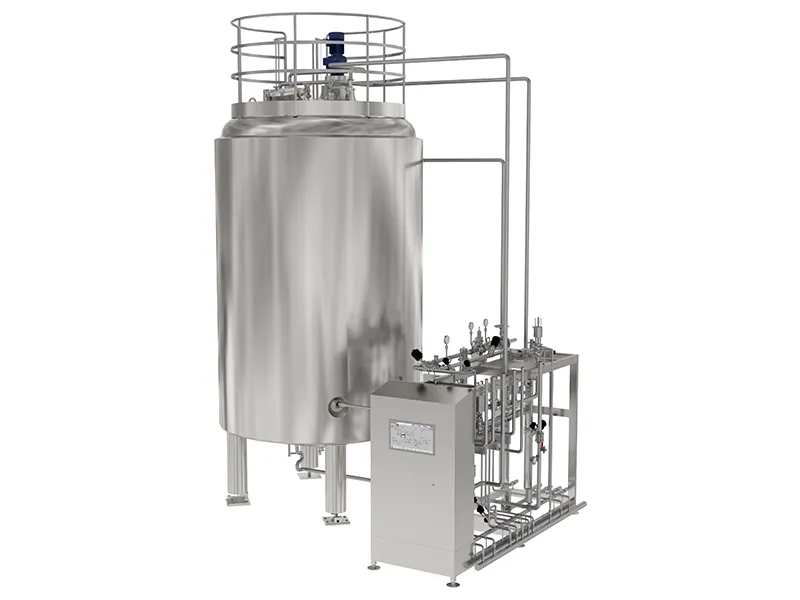
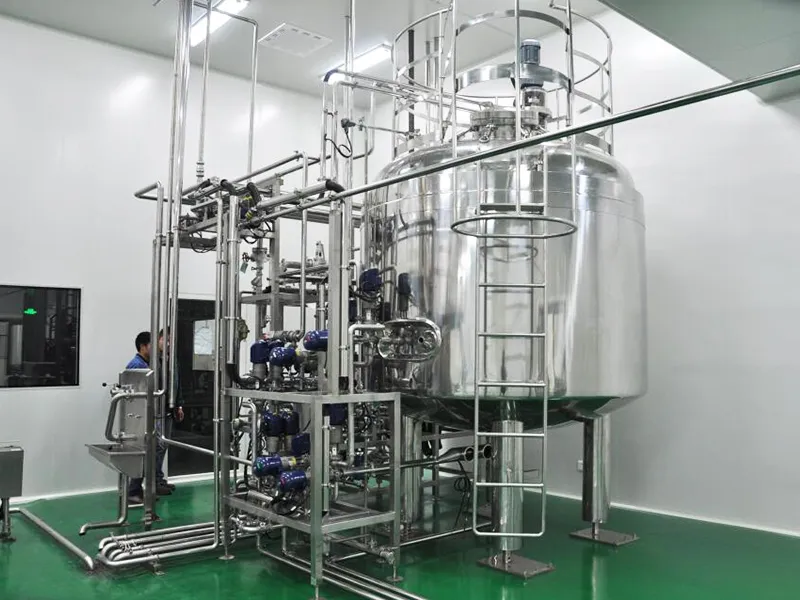
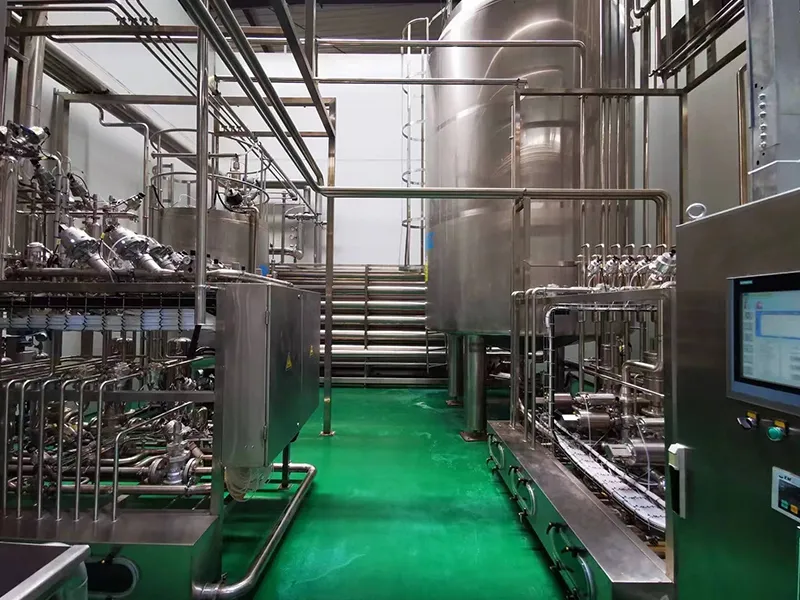
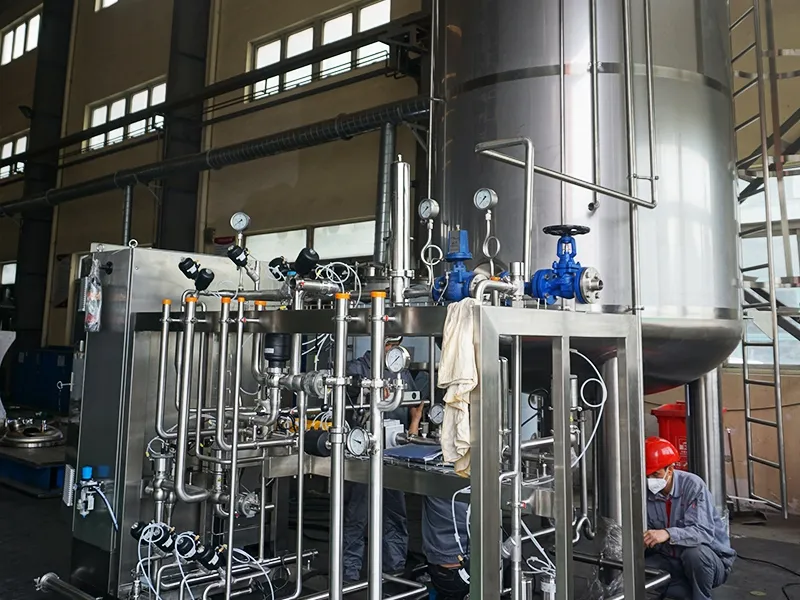
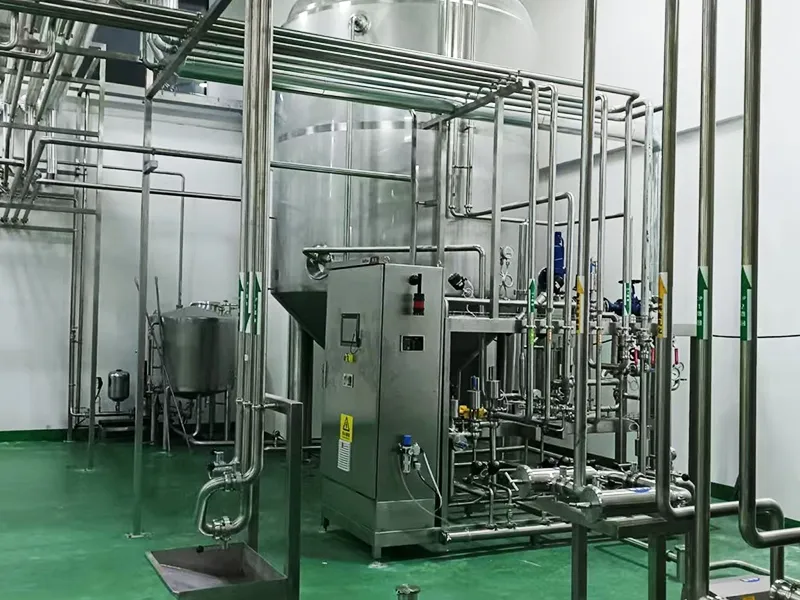
Aseptic tank systems store sterilized liquid products for extended periods while protecting them from microbial contamination. They are used in processes that require high hygiene and safety standards and mainly consist of a tank, valve assembly, CIP system, and PLC controls. Positive pressure inside the tanks, maintained by pressure-controlled sterile compressed air and steam filtration, prevents outside air from entering. Before operation, the tanks and connected piping undergo CIP cleaning and SIP sterilization. The sterilized product enters the closed tank and stays isolated from outside air and microorganisms during storage. If the pressure inside the tank changes, the breather admits filtered sterile air to restore the pressure while keeping contaminants out.
These tanks are made from SUS316L and SUS304 stainless steel, with mirror-polished inner surfaces. Their main structure includes the cylindrical vessel, support legs, and upper and lower dished ends. According to the customer’s requirements, the tanks may include hygienic manholes, sight glasses, product inlets and outlets, CIP connections, level and temperature gauges, spray balls, breathers, pressure gauges, and safety valves.
Aseptic storage tanks are widely used in fruit juice, dairy, and pharmaceutical production for the sterile storage of UHT-treated liquids before filling. Typical products include fruit juice, dairy drinks, oral liquid medicines, and other acidic or neutral liquids. The closed storage conditions preserve product quality, flavor, and nutritional value.
- The parts that come into contact with the liquid use SUS316L stainless steel; the rest of the tank uses SUS304
- Vertical cylindrical pressure tanks include cooling jackets
- A pressure-controlled supply of sterile compressed air and a steam-filter module maintains aseptic conditions inside the tanks
- Each tank has an independent, fully automatic CIP cleaning system
- UHT control systems and filling machines can connect to the tanks, and one UHT system can supply several filling machines when required.
- Product changeovers and tank cleaning can continue without interrupting production or sending the liquid back for a second sterilization.
- Remote access gives technicians real-time information for system maintenance.
- Closed, sterile storage protects the liquid from contamination and helps extend its shelf life.