Vacuum Deaerator
Main Specifications
- High-level condenser area: 2 m²
- Juice inlet temperature: 66–68℃
- Juice outlet temperature: 60–62℃
- Vacuum pressure: −0.078 to −0.080 MPa
- Cooling water: 2000 kg/h, inlet 2℃/ outlet 12℃
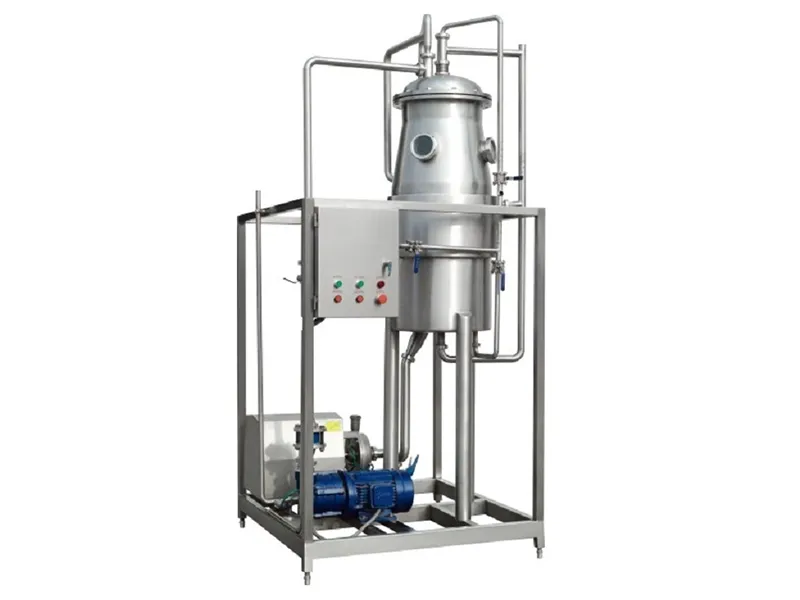
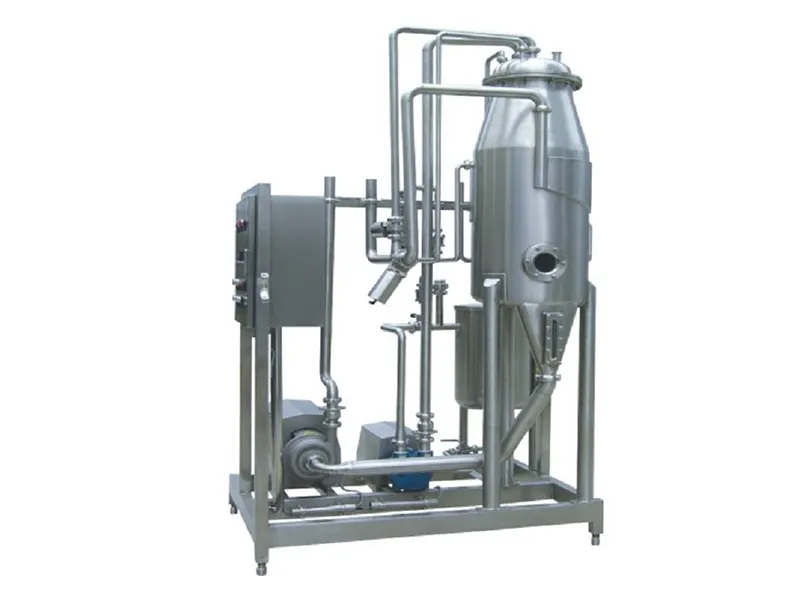
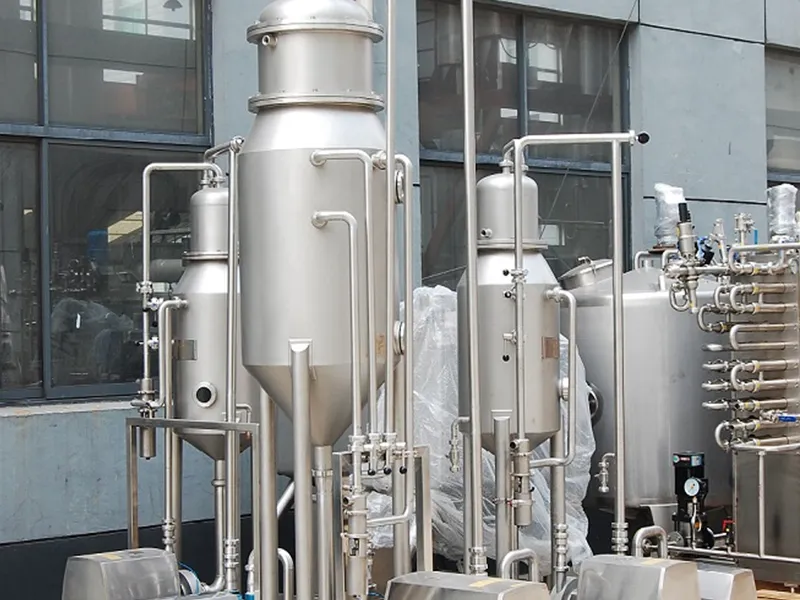
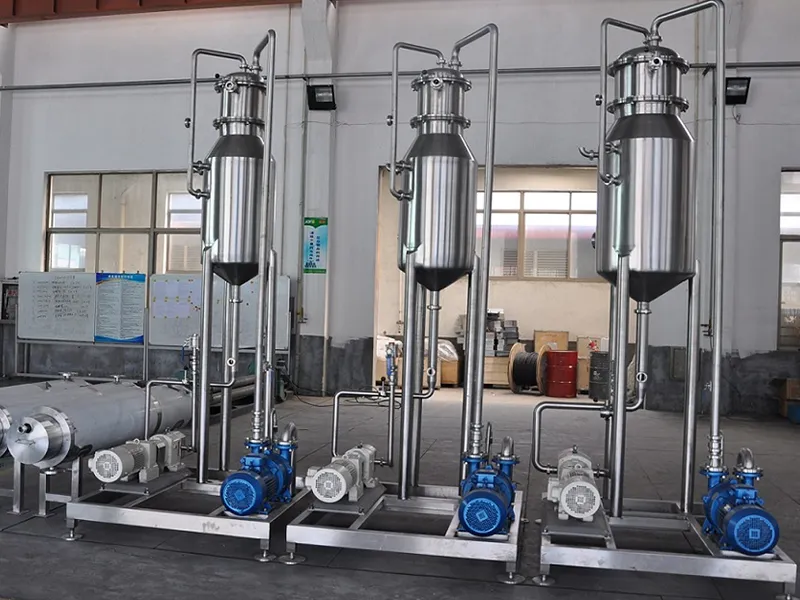
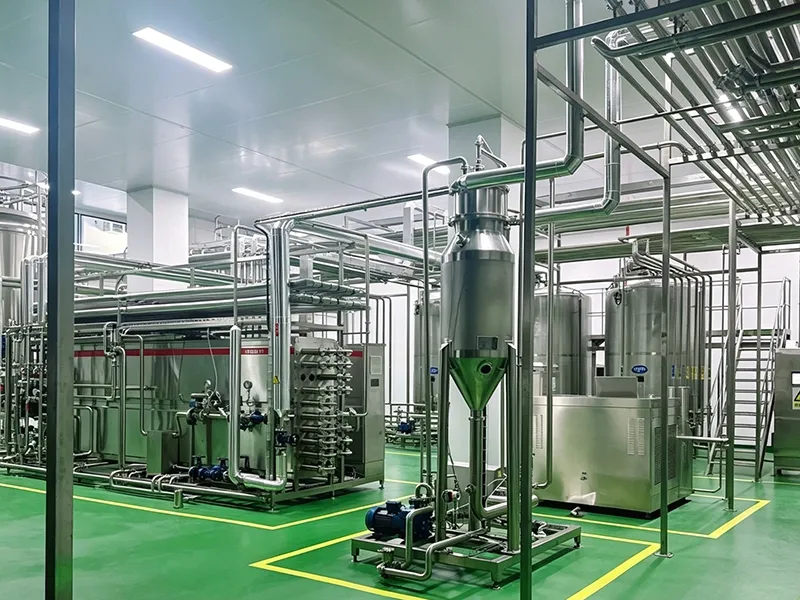
Vacuum deaerators remove unwanted gases, such as oxygen, out of liquid products before the next processing stage. They work by lowering the pressure inside a closed tank, which makes dissolved gases easier to release from the liquid. The vacuum deaerator mainly consists of a deaeration tank, vacuum pump, and centrifugal pump, all made with food-grade stainless steel and silicone rubber seals.
Process Flow
- Creating the Vacuum: The vacuum pump lowers the pressure inside the closed deaeration tank so dissolved gases can leave the liquid more easily.
- Gas Release: As the pressure falls, the dissolved gases separate from the liquid and move toward the top of the tank.
- Gas Removal: The gases collect in the upper part of the tank and leave through the exhaust valve, while the deaerated liquid continues to the next processing stage.
Applications
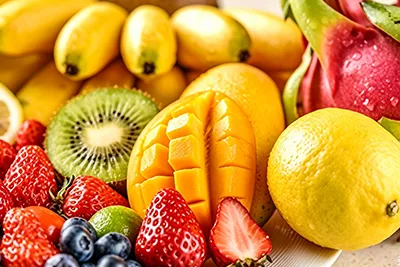
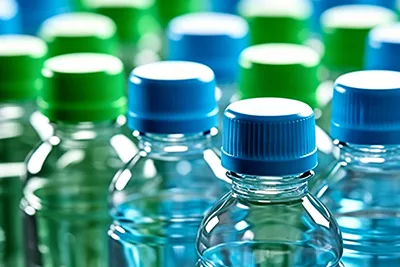
Vacuum deaerators are widely used in milk, juice, and beverage production when dissolved air or oxygen needs to be removed before the product moves on to filling or another processing stage.
Features
- Deaeration limits oxygen-related browning and preserves vitamin C, natural pigments, aroma compounds, and the product’s original color.
- Deaerated liquid produces less foam during filling and high-temperature sterilization.
- An optional aroma-recovery unit captures natural aroma compounds released during deaeration and returns them to the liquid, restoring a freshly pressed flavor.
- After deaeration, fewer gas bubbles remain on the heat-exchanger surfaces, so heating becomes more efficient.
- Gas can collect at high points in the pipework or in areas with poor circulation, creating air locks that interrupt flow. The deaerator removes this trapped gas and keeps the liquid moving.